 Reviews

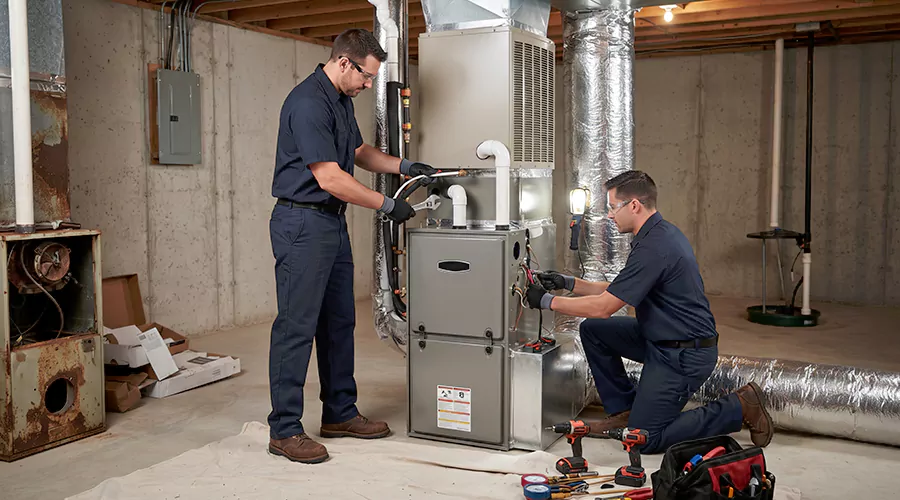
The cost to replace furnace and AC equipment together is typically $5,000 to $12,500 in 2026, with a national average near $7,500. Larger homes can cost more because equipment capacity increases. Higher-efficiency systems can also move a project well beyond the typical range.
Replacing both systems together can sometimes cost less than completing two separate projects. The installation shares labor and some setup work. The more important benefit is that the furnace blower and cooling equipment can be selected as a properly matched system rather than combining new equipment with an aging component.
A low quote can still become expensive if it excludes permits or duct changes. Compare the full installed scope before comparing totals.
What Does Furnace and AC Replacement Cost in 2026?
A standard furnace and central air replacement usually costs $5,000 to $12,500 installed in 2026. Angi reports an average near $7,500. Premium equipment can move beyond this range. Projects that require duct corrections or electrical modifications can also rise substantially.
- A basic replacement assumes the home already has usable ductwork.
- It also assumes the electrical supply can support the new cooling equipment.
- A straightforward project normally replaces the furnace plus the outdoor condenser.
- The indoor evaporator coil is commonly replaced with the AC equipment as well.
Combined HVAC Project Cost Tiers
| Project level | Typical 2026 planning range |
|---|---|
| Basic furnace and AC replacement | $5,000 to $8,000 |
| Mid-range matched system | $7,000 to $10,000 |
| Larger or higher-efficiency system | $9,000 to $12,500 |
| Premium equipment | $12,500 to $18,000+ |
| System plus major duct work | $10,000 to $20,000+ |
Angi's broader 2026 data puts complete HVAC replacement between $5,000 and $22,000. That broader range includes system types and projects that extend beyond a straightforward furnace-and-AC changeout.
This difference explains why two national cost articles can show different numbers without either one being wrong.
The scope must match before the prices can be compared.
Why Does Replacing Both Together Sometimes Cost Less?
Replacing both systems during one project can reduce duplicated labor because the installer accesses shared components once. Angi estimates labor around $1,500 for a combined replacement. Separate projects can require another setup visit and another installation process when the second system eventually fails.
The furnace and central AC are more connected than they may appear. A split cooling system commonly uses the furnace blower to move cooled air through the ducts. That means an older furnace can still affect the performance of a new outdoor AC. Equipment matching matters too. A new high-efficiency cooling system can have requirements that an older indoor setup was not designed to meet. Replacing both at once does not automatically mean you save money. If your furnace is only four years old and operating correctly then removing it early can waste useful equipment life. The combined approach makes more sense when both systems are aging or when compatibility becomes an issue.
What Determines the Final HVAC System Cost?
The final HVAC system cost depends mainly on equipment capacity and efficiency. Installation conditions can change the total further. A larger home may need more heating output and greater cooling capacity. Existing ducts or electrical limitations can add thousands of dollars beyond the equipment price.
- Efficiency is one major factor.
- A basic furnace can use an 80% AFUE design.
- Higher-efficiency gas furnaces can reach 90% AFUE or above.
Trane's 2026 national pricing shows its 80% furnace models around $5,093 to $6,386 installed. Its 96% models range from about $6,630 to $8,390.
- Cooling efficiency creates a similar price difference.
Trane's current national guide places its single-stage AC example at $6,568 to $8,544. Its premium variable-speed example reaches $11,525 to $13,669.
- These are brand-specific ranges rather than universal market averages.
- They still demonstrate why efficiency level can move quotes by thousands.
How Much Does Home Size Affect the Price?
Home size influences replacement cost because larger homes often require more heating output and cooling capacity. Square footage should be used as a planning clue rather than the sole sizing method. Insulation and window exposure can substantially change the load even between homes with identical floor areas.
- Angi identifies home size as one of the main drivers of combined replacement cost.
- A 1,500-square-foot house usually requires less capacity than a 3,000-square-foot house.
- That does not mean equipment should be chosen directly from a square-foot chart.
- Climate matters.
- Insulation matters too.
- A heavily shaded house can perform differently from a similar home with large west-facing windows.
- Ask how the proposed furnace capacity was determined.
- Then ask the same question about AC tonnage.
- Replacing the old equipment with the exact same capacity is not proof that the original system was sized correctly.
What Is Included in a Typical Replacement Quote?
A complete quote should identify the furnace plus the cooling equipment being replaced. It should also state whether the indoor coil is included. Labor and permits need to be clear. Any required duct or electrical modifications should appear separately so you can compare competing proposals fairly.
- The proposal should provide exact model numbers.
- It should identify the furnace efficiency.
- The AC efficiency rating should also appear.
- Ask whether the thermostat is included.
Angi reports combined installation labor around $1,500 as a national planning figure. Permit expenses and duct changes can add to that amount.
- A proper HVAC system installation estimate should also explain what will happen to the existing refrigerant lines.
- Ask whether the condenser pad remains usable.
- Removal of old equipment should be identified too.
- Never assume an item is included simply because another contractor included it.
What Extra Costs Can Appear After the Initial Quote?
Extra costs usually appear when the existing home cannot support the new equipment without modification. Duct damage can increase the price. An inadequate electrical supply can do the same. Permits or thermostat upgrades can also move a seemingly straightforward replacement beyond the original equipment estimate.
- Current Angi data shows ductwork changes can add about $3,000 to $7,500 on some AC replacement projects.
- A different project may need only a small duct correction.
- Permit pricing depends on local requirements.
- Electrical modifications depend on the existing panel and equipment requirements.
Potential Additional Costs
| Potential addition | Why it may be needed |
|---|---|
| Duct correction | Existing airflow is inadequate |
| Electrical work | New equipment needs different power |
| Thermostat change | Existing control is incompatible |
| Drain modifications | Condensate routing needs correction |
| Refrigerant line work | Existing line is unsuitable |
| Permit fees | Local code requires approval |
| Equipment removal | Old units need disposal |
The new HVAC system cost should therefore be evaluated as an installed total.
Equipment-only pricing does not describe the completed project.
Is It Better to Replace the Furnace and AC Separately?
Separate replacement makes sense when one system is relatively new and has substantial useful life remaining. Combined replacement becomes easier to justify when both components are old. Compatibility can also push the decision toward replacing both rather than connecting modern cooling equipment to an aging heating system.
- Suppose your AC fails at 14 years old.
- Your furnace is also 15 years old.
- Paying installation labor now and returning shortly for another replacement can create duplicated cost.
- The calculation changes if the furnace is only three years old.
- Keeping a healthy newer furnace can make financial sense.
Angi notes that replacing both at once can reduce overall installation complexity and avoid paying for separate projects later.
- The decision should be based on remaining equipment condition rather than age alone.
- Repair history also matters.
How Does Combined Replacement Compare With Individual Costs?
A combined system often costs less than simply adding two separate replacement averages together. Angi places a new furnace around $2,800 to $6,900 and AC replacement around $3,900 to $8,000. Its combined range is $5,000 to $12,500 with a $7,500 average.
Individual vs. Combined System Ranges
| Replacement approach | 2026 national range |
|---|---|
| Furnace alone | $2,800 to $6,900 |
| Central AC alone | $3,900 to $8,000 |
| Furnace and AC together | $5,000 to $12,500 |
| Broad full HVAC replacement | $5,000 to $22,000 |
The wider replacement figure includes more system configurations. That is why the cost to replace HVAC equipment can appear much higher in broad pricing guides. Do not add the highest furnace number to the highest AC number and assume that is your likely combined quote. Those figures can represent different homes and different equipment tiers.
When Does Ductwork Change the Replacement Budget?
Ductwork can change the project by several thousand dollars when existing ducts leak heavily or cannot deliver the airflow required by new equipment. Full duct replacement is not automatically needed with every furnace-and-AC change. The condition of the existing distribution system should determine whether correction is necessary.
- Old ducts can still perform well.
- New ducts can also perform poorly if they are sized incorrectly.
- The correct question is whether the current system delivers proper airflow.
- Visible damage deserves attention.
- Rooms that have always stayed uncomfortable can provide another clue.
The heating and cooling installation should not ignore a known distribution problem simply because the equipment itself is new.
- A premium system connected to weak ductwork can still produce poor room comfort.
- The equipment cannot correct major distribution defects by itself.
10 Signs It May Be Time to Replace Both Systems
Replacing both systems deserves consideration when age is combined with recurring failures or declining comfort. One old component alone does not automatically justify replacement. The case becomes stronger when the furnace and AC both need expensive work or when compatibility limits the replacement choices available.
Warning Signs Checklist
- Both systems are more than a decade old.
- The AC needs a major compressor repair.
- The furnace needs an expensive major component.
- Repairs have occurred repeatedly over two seasons.
- Cooling performance has declined despite normal maintenance.
- Heating performance has also become inconsistent.
- Several rooms remain uncomfortable during peak weather.
- One replacement would create equipment compatibility issues.
- Energy use has risen without a major thermostat change.
- The combined repair estimates approach a meaningful share of replacement cost.
Trane states that properly installed air conditioners are commonly expected to last about 15 years. Its furnace life estimate is about 15 to 20 years. These are planning figures rather than expiration dates. A well-performing 16-year-old furnace does not need replacement solely because it crossed an age threshold.
What Can You Check Before Requesting Quotes?
You can improve quote accuracy by collecting equipment information before anyone visits. Record the furnace model plus the outdoor AC model. Note the approximate age of each unit. Write down any rooms with persistent comfort problems. This creates useful evidence without touching internal electrical or gas components.
- Photograph each equipment label.
- Record your home's approximate square footage.
- Find any previous repair invoices.
- Check whether the existing thermostat has zoning controls.
- Look at exposed duct sections for obvious physical damage.
- Do not open the furnace combustion compartment.
- Do not test refrigerant pressure yourself.
- This is an information-gathering step rather than a DIY replacement assessment.
- Ask each estimator to explain the proposed capacity.
- That question is more useful than asking only which brand is best.
When Should You Have the System Professionally Evaluated?
A professional evaluation makes sense when a major component has failed or when both systems are approaching replacement age. The evaluation should determine capacity and equipment compatibility. It should also examine the existing air distribution system before a final quote is treated as complete.
- Request the exact equipment models in writing.
- Ask what efficiency levels are included.
- Find out whether the evaporator coil is part of the project.
- Ask whether any existing components will remain.
- The HVAC replacement estimate should show optional upgrades separately when possible.
- That makes the base project easier to compare.
A high-end thermostat should not make one contractor appear thousands more expensive if another quote does not include one.
- The same principle applies to duct modifications.
- Comparable scope produces comparable pricing.
How Can You Protect the Value of a New System?
The best way to protect a new system is to preserve proper airflow and respond early when operation changes. Filters should not be allowed to become heavily restricted. Outdoor cooling equipment needs clear airflow. New noises or repeated startup problems deserve attention before a small issue becomes a larger repair.
- Keep replacement records with the model numbers.
- Store warranty documents where they can be found easily.
- Register equipment when the manufacturer requires registration for enhanced warranty terms.
- Follow the maintenance schedule provided for the installed equipment.
- Watch for persistent changes in room comfort.
- Do not treat refrigerant loss as normal consumption.
- The equipment itself represents only part of the investment.
- Correct setup at the beginning can have a major effect on how the system performs for years.
Conclusion
The cost to replace furnace and AC equipment together usually falls between $5,000 and $12,500 in 2026. Capacity and efficiency influence the price while duct or electrical work can raise it further. Compare exact equipment and installation scope rather than total price alone. This week, photograph both equipment labels and collect your recent repair records before requesting estimates.
Frequently Asked Questions
It can be. Combined replacement can reduce duplicated installation work compared with two separate projects. The savings matter most when both systems already need replacement.
A straightforward replacement can often be completed within one working day. More difficult jobs can take longer when duct or electrical modifications are required.
It deserves comparison rather than automatic replacement. Trane places typical furnace service life around 15 to 20 years. Condition and repair history should guide the final decision.
No. Existing ducts can remain when they are correctly sized and in suitable condition. Duct changes become relevant when airflow or physical condition is poor.
No. Higher efficiency increases upfront cost. The value depends on climate and operating hours as well as the price difference between the equipment options.
Different contractors may be quoting different equipment capacities or installation scopes. Compare model numbers and included modifications before deciding that one proposal is simply cheaper.